اردو

Coming soon · Pakistan, UAE and UK

Keep it clear.Keep them close.

The hisaab app for udhar, trips, committees and your shop's khata.

  • Udhar
  • Trips
  • Committee
  • Ghar ka kharcha
  • Khata

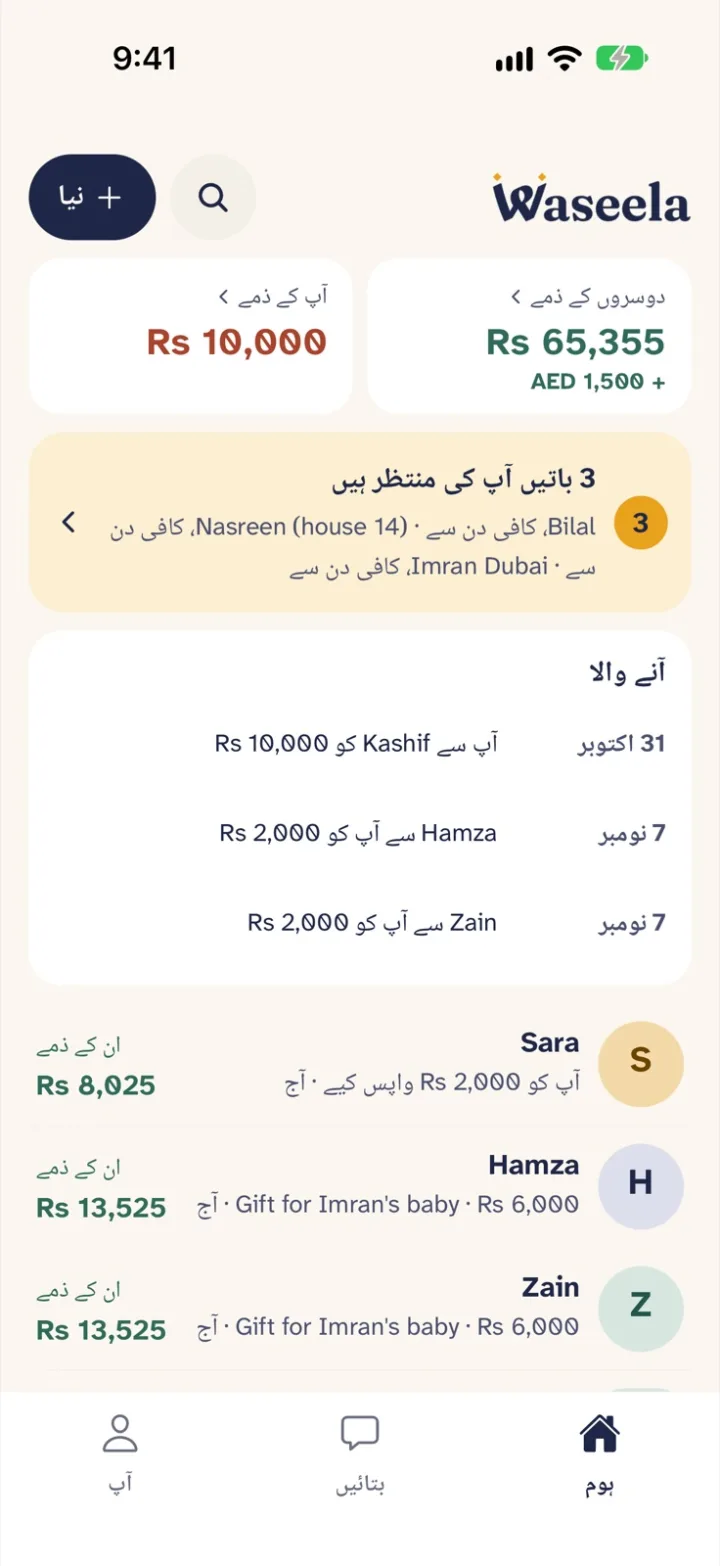
Say it or type it, in Urdu or English. Both of you see the same record. You pay each other the way you always do; Waseela never holds or moves money.

Between family and friends, it's different

It's not the money. It's not knowing where you stand.

No bank statement for the 20,000 you lent your cousin. No receipt for the hotel your friend paid for. Just memory, a few WhatsApp messages, and that awkward feeling when you have to ask. When nobody's sure of the numbers, even good friendships go quiet.

Tell Waseela

Just say it.

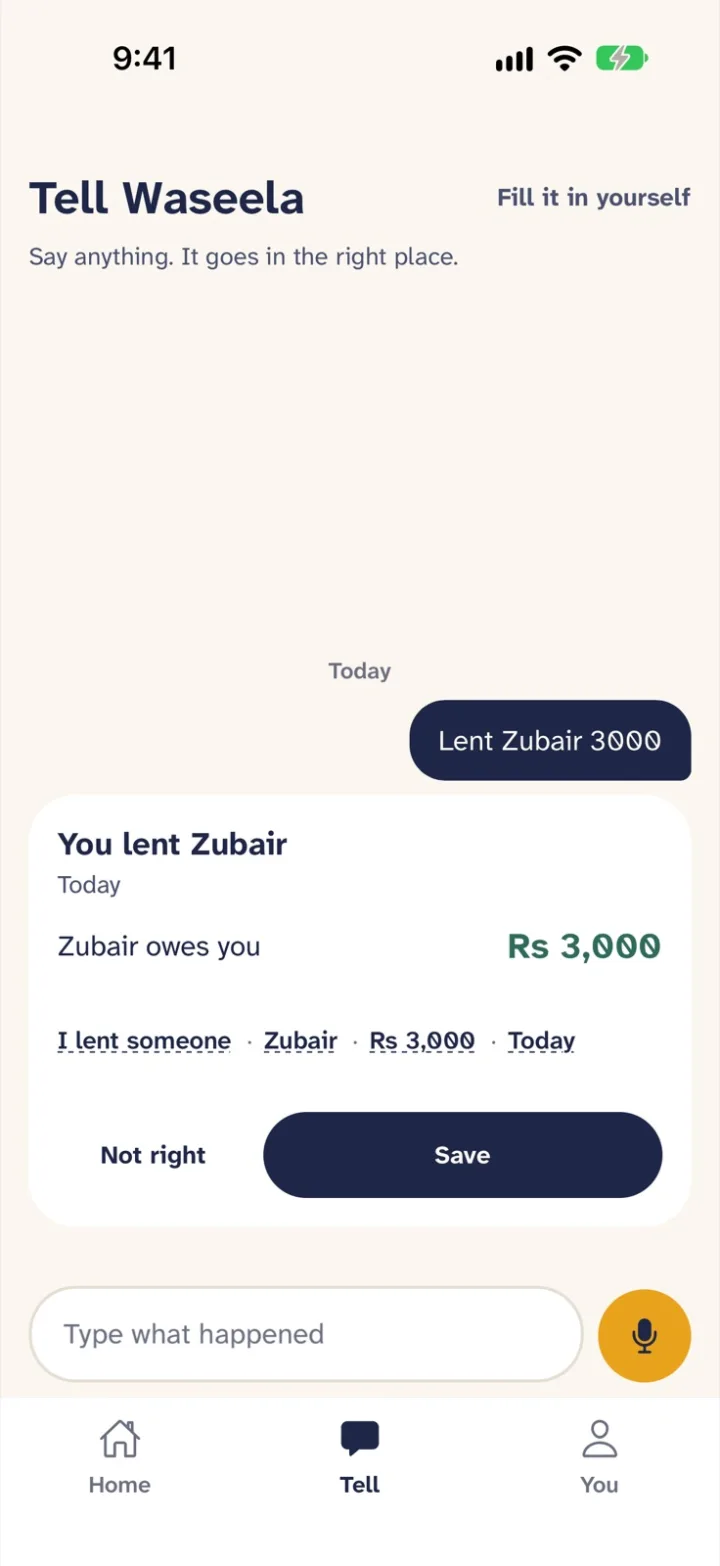
“Bilal ko 5,000 udhar diye”

Speak or type the way you talk, in Urdu, English or both. Waseela shows a card with who owes whom. Nothing is saved until you say it's right.

Just say it.

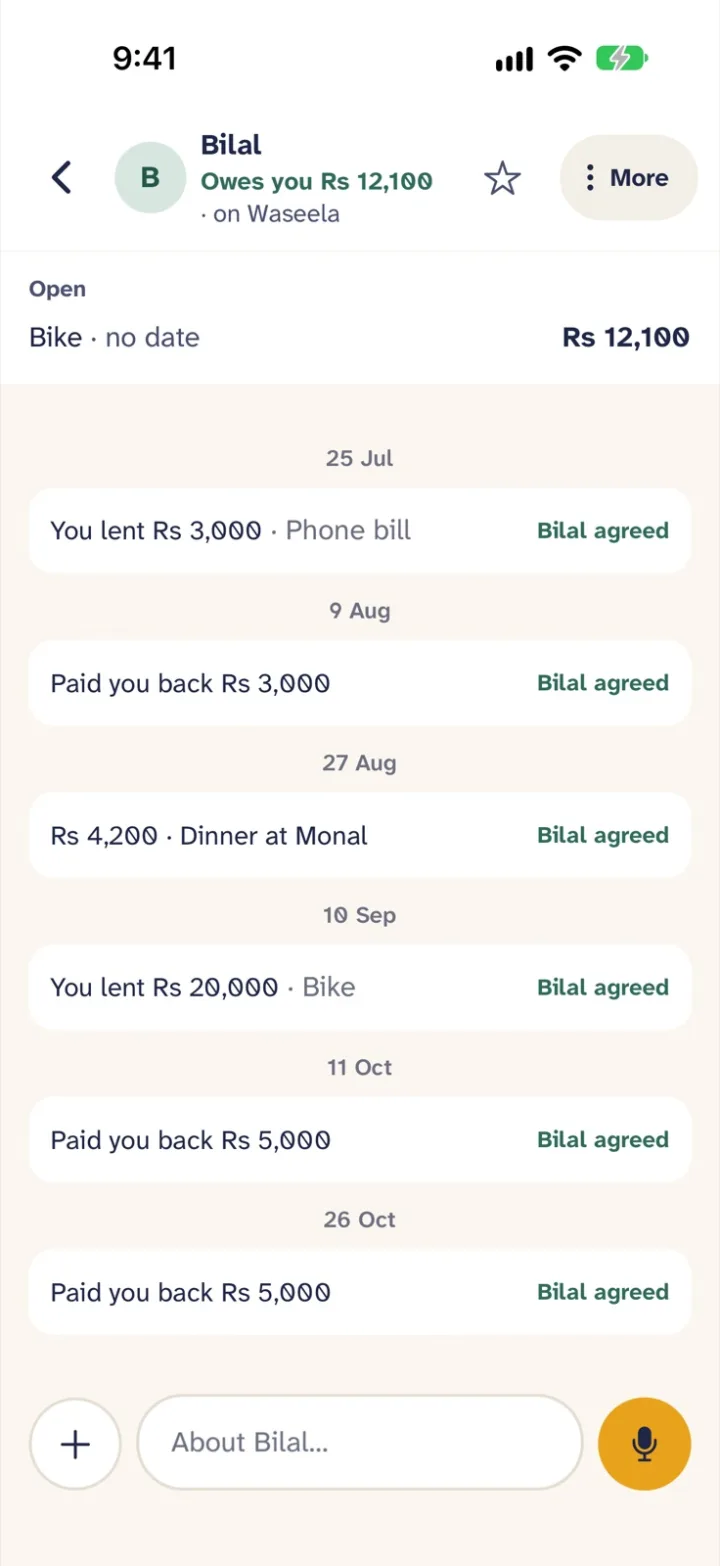
“Was it 20,000 or 25,000? And has he paid 5,000 back already?”

Lend without keeping score in your head

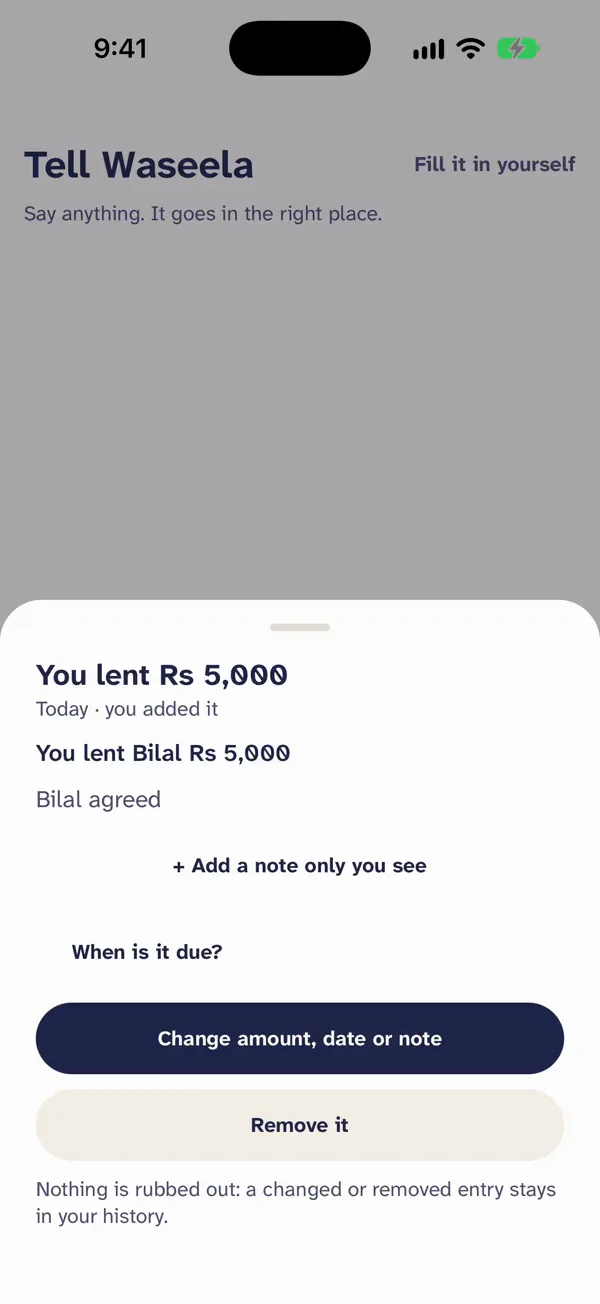
Say it the way you would: “Lent Bilal 20,000 for his bike.” As it comes back, bit by bit, Waseela keeps what's left. No arguing over numbers months later.
Lend without keeping score in your head

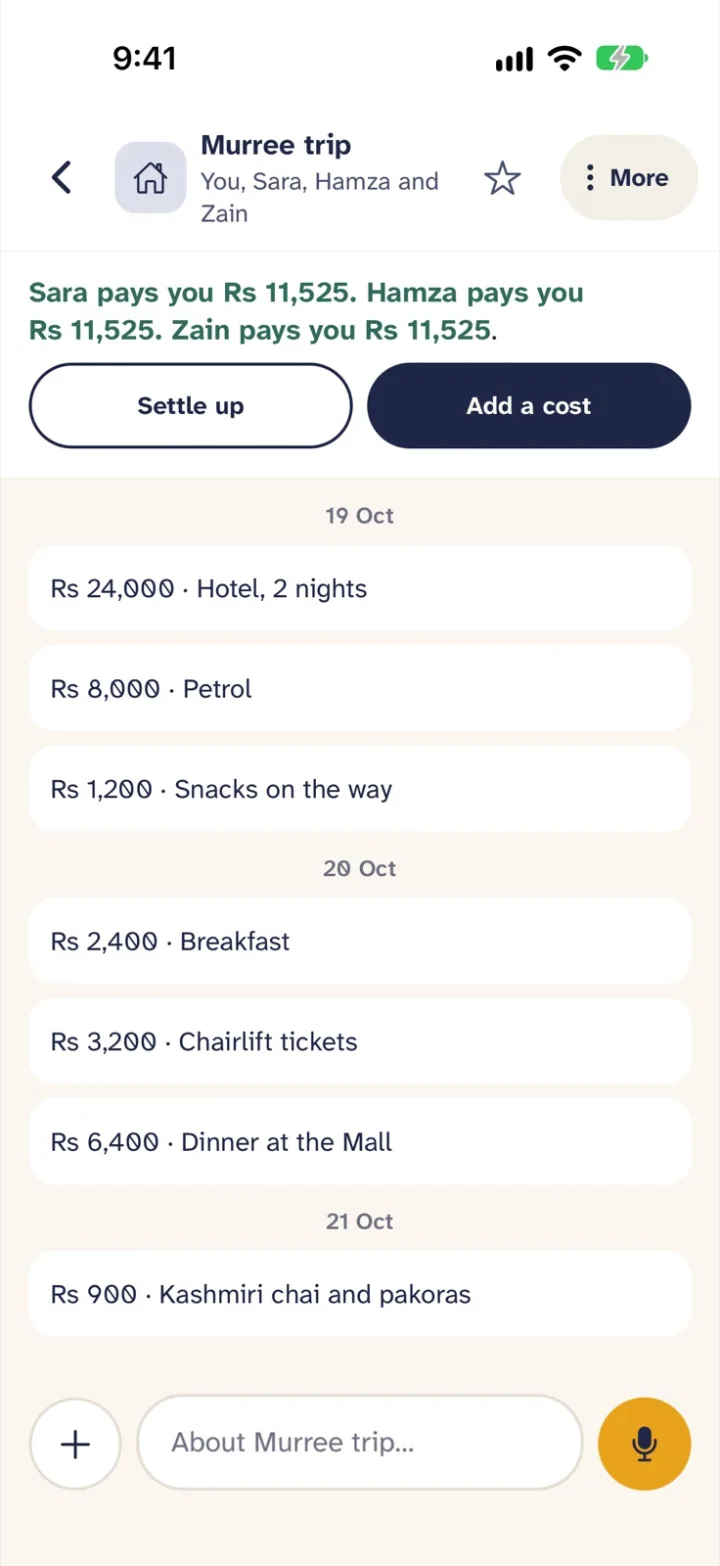
“Who paid for the hotel? And the petrol? Who owes whom now?”

Come back from the trip still friends

Add the hotel, the petrol, the dinners as they happen, split equally or your way. At the end, Waseela shows who owes whom, and exactly what each of you pays to settle up.

Come back from the trip still friends

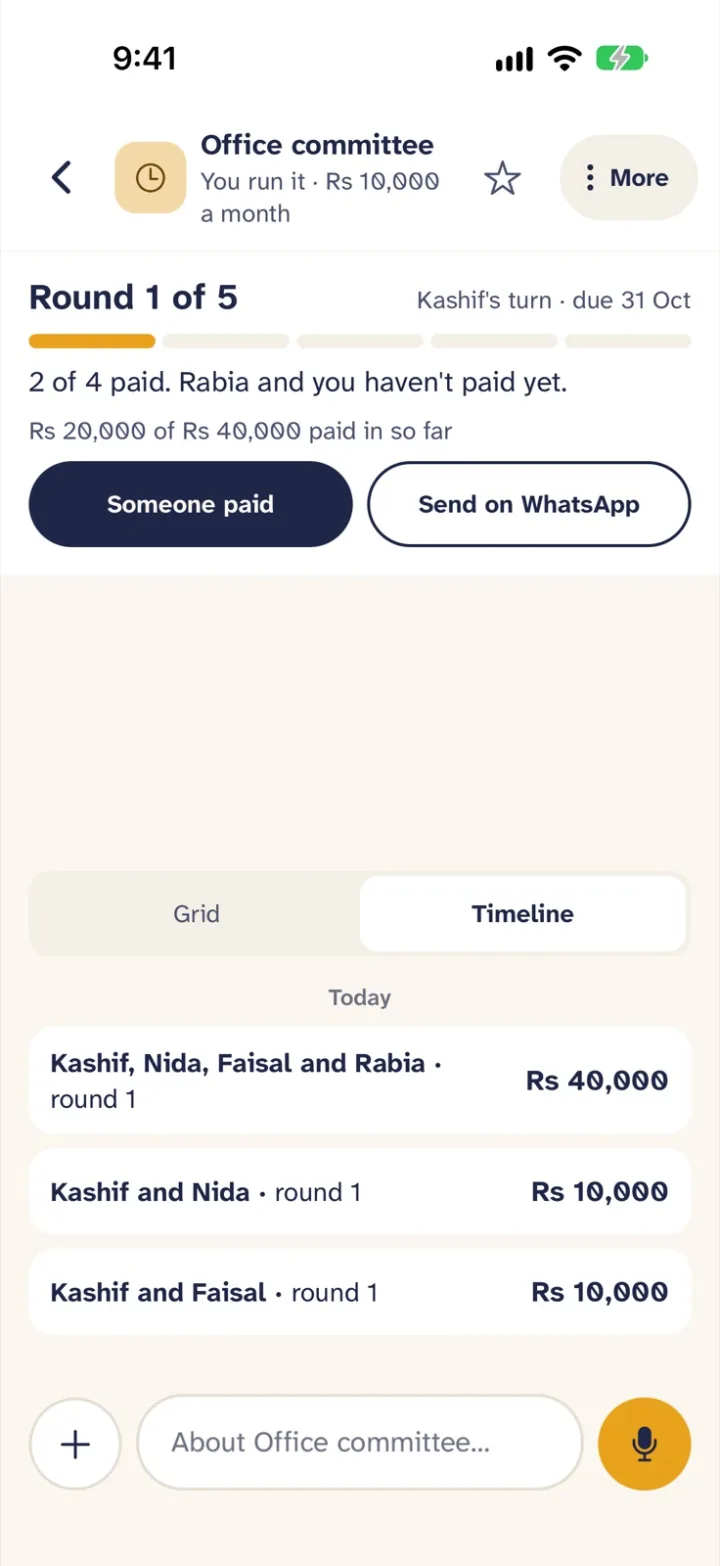
“Whose turn is it this month, and who still hasn't paid?”

Run the committee without the notebook

The monthly committee with your office or family: who's in, whose turn it is, who has paid this round, on one grid. Swap turns, skip a month, everyone sees the same list.

Run the committee without the notebook

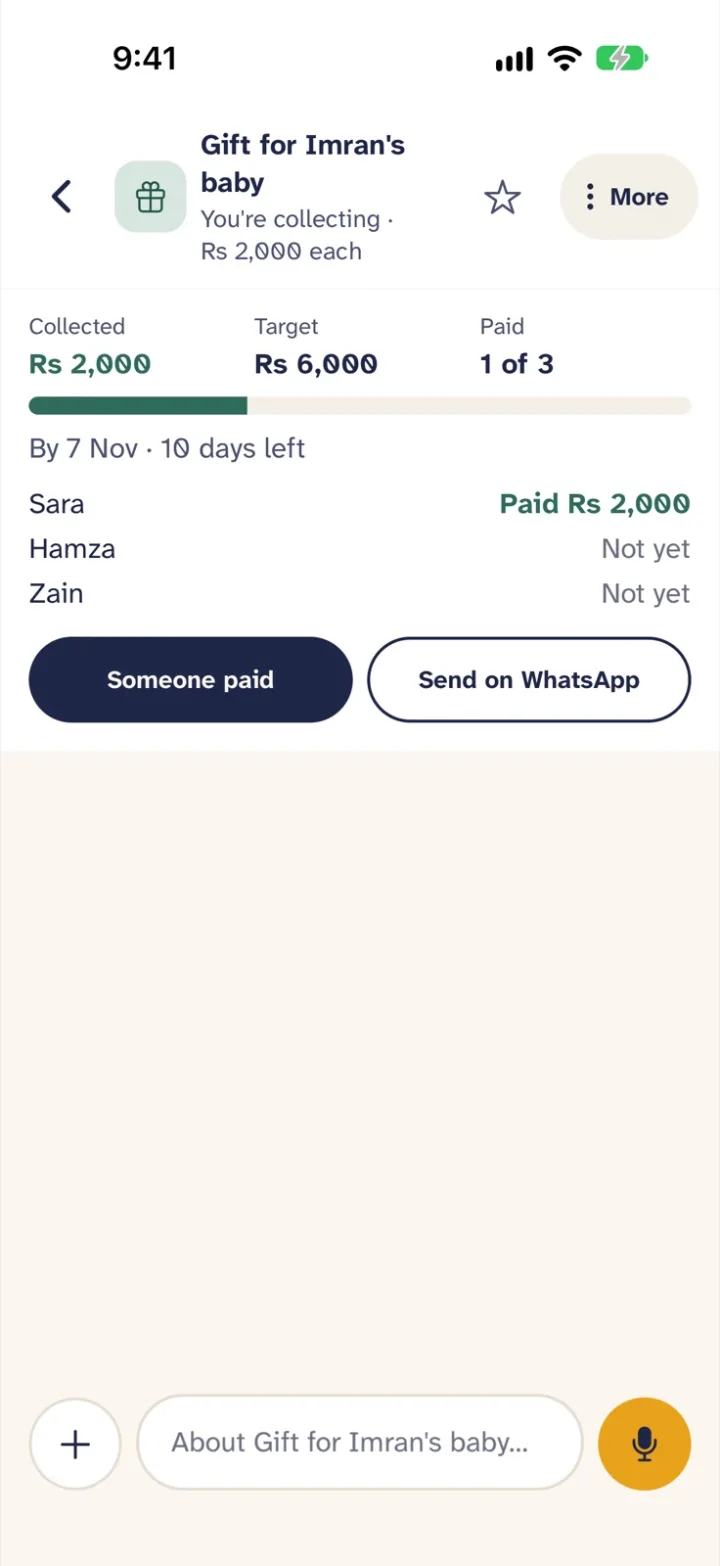
“Farah's gift, 2,000 each. Who's given, and who hasn't?”

Everyone puts in their share

A gift, a dinner, something for the family: ask each person for their part. Waseela shows who has given and who's left, and reminds them for you. The money goes straight to whoever is collecting.

Everyone puts in their share

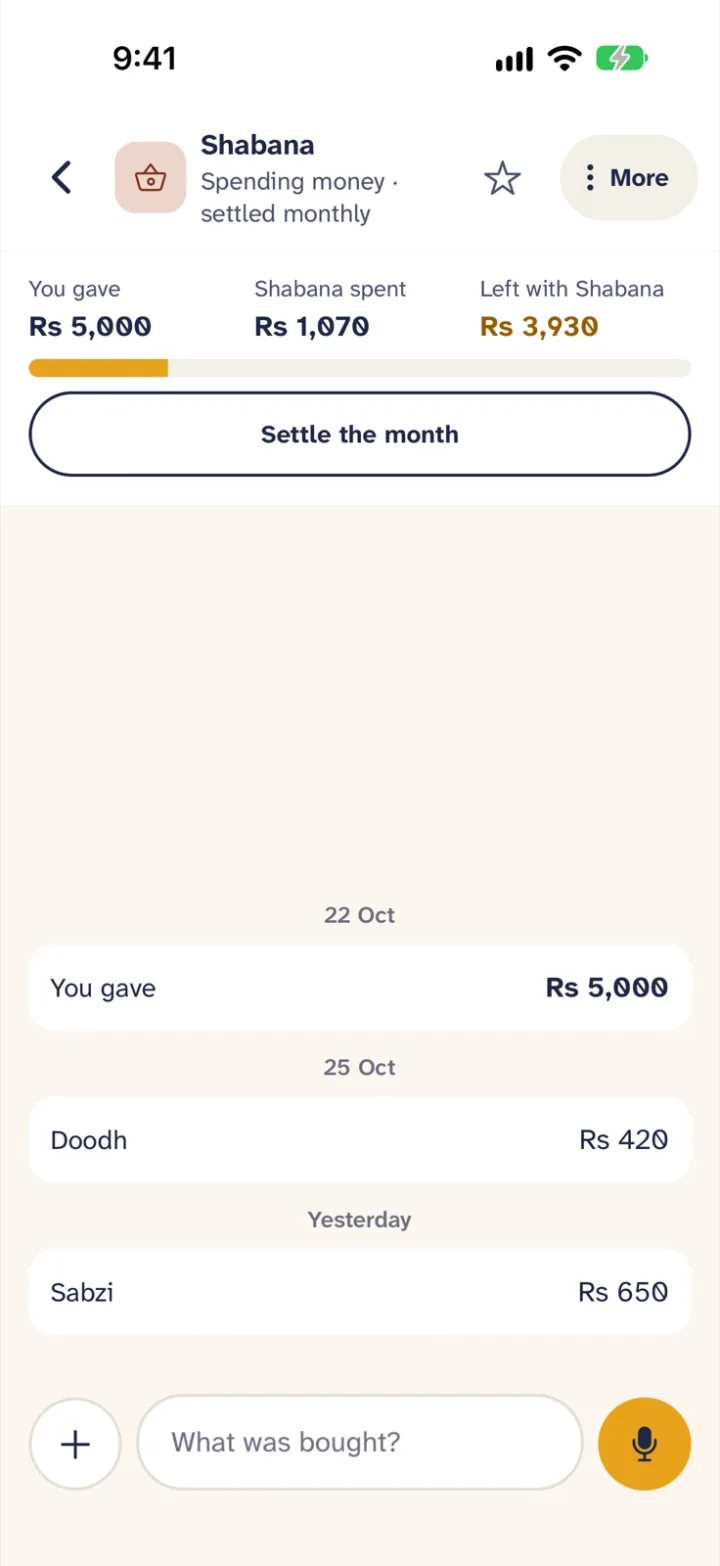
“I gave Shabana 5,000 for the house. Where did it all go?”

Spending money for the house

Give the helper or the driver money for the house, and note what's bought as it happens: milk 420, vegetables 650. Waseela shows what's left with them, and you settle up every week or month.

Spending money for the house

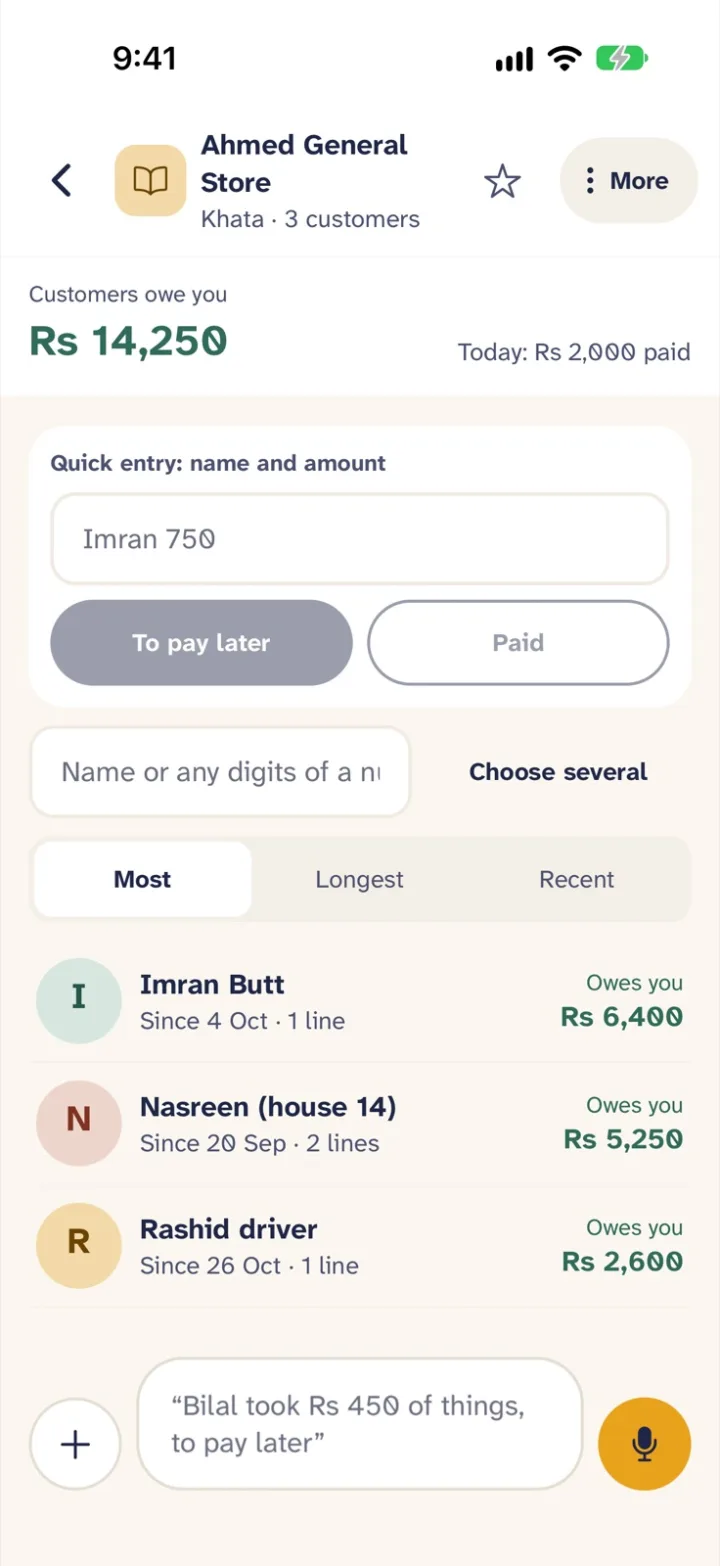
“Imran, Nasreen, Rashid driver… who owes the shop what?”

A shop's khata, on the phone

Start a khata for the shop and add the customers who pay later. Type “Imran 750” and tap. See who owes most and who has owed longest, and send each a polite WhatsApp from your own phone. Customers never see each other.

A shop's khata, on the phone

How it works

  1. 1

    Say it, or tap it

    Money lent, a shared bill, money paid back: tell Waseela, or fill it in yourself.

  2. 2

    They see it too

    People you add see the same record when they join, and can agree.

  3. 3

    Waseela remembers

    What's left, whose turn, when it's due. You don't have to.

Made for how we actually talk about money

Udhar, committee, kharcha, khata, “thora thora karke”. Speak in Urdu, English or Roman Urdu, and use the app in either language. Amounts in lakh and crore when that's how you count.

Your money stays with you

Questions

Does Waseela send or receive money?

No. You pay each other however you already do: cash, bank transfer, anything. Waseela only keeps the record of it.

Do the other people need the app?

No. You can keep track on your own. If they join with their number, they see the same record and can agree to it.

Who can see my records?

Only you, and the people a record is with once they join. You can also keep someone private, just for you.

Which countries and languages?

Pakistan, the UAE and the UK first, in English and Urdu, with any currency.

Keep it clear between you, and kind.

Waseela is coming soon to iPhone and Android.